Case study: Palo — a sustainable play system designed by Talanja Doan as a bachelor thesis at Hochschule für Gestaltung Schwäbisch Gmünd in 2022. Children turn household paper waste into modular building blocks through a four-step ritual: rip, process, shape, play.
Bachelor Thesis 2022
Palo — Sustainable Play
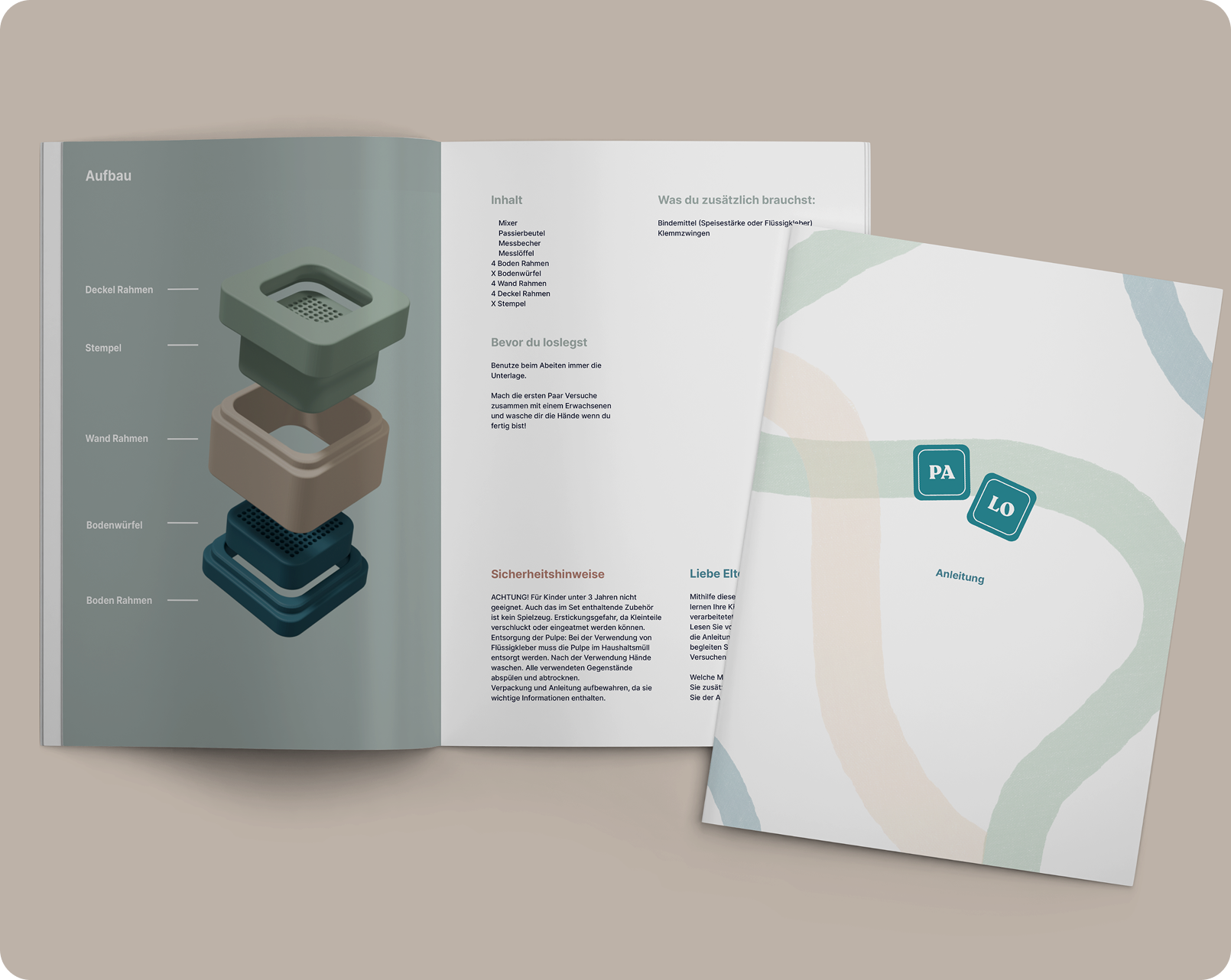
By using materials from their own homes, children are encouraged to explore the paper recycling process by creating their own building blocks. Palo teaches children the importance of resource conservation and waste management by focusing on situations from their daily lives.
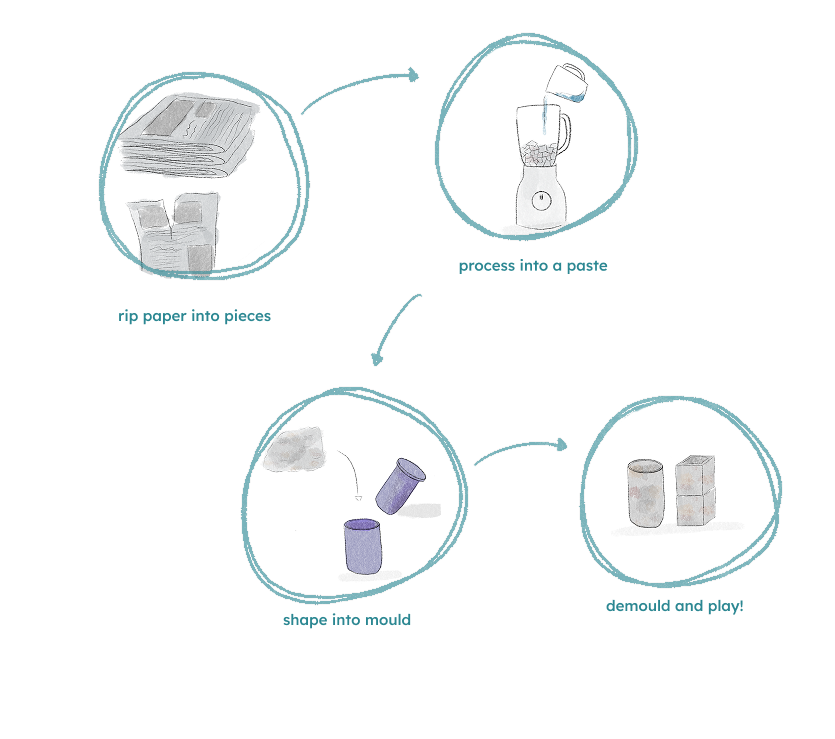
The process.
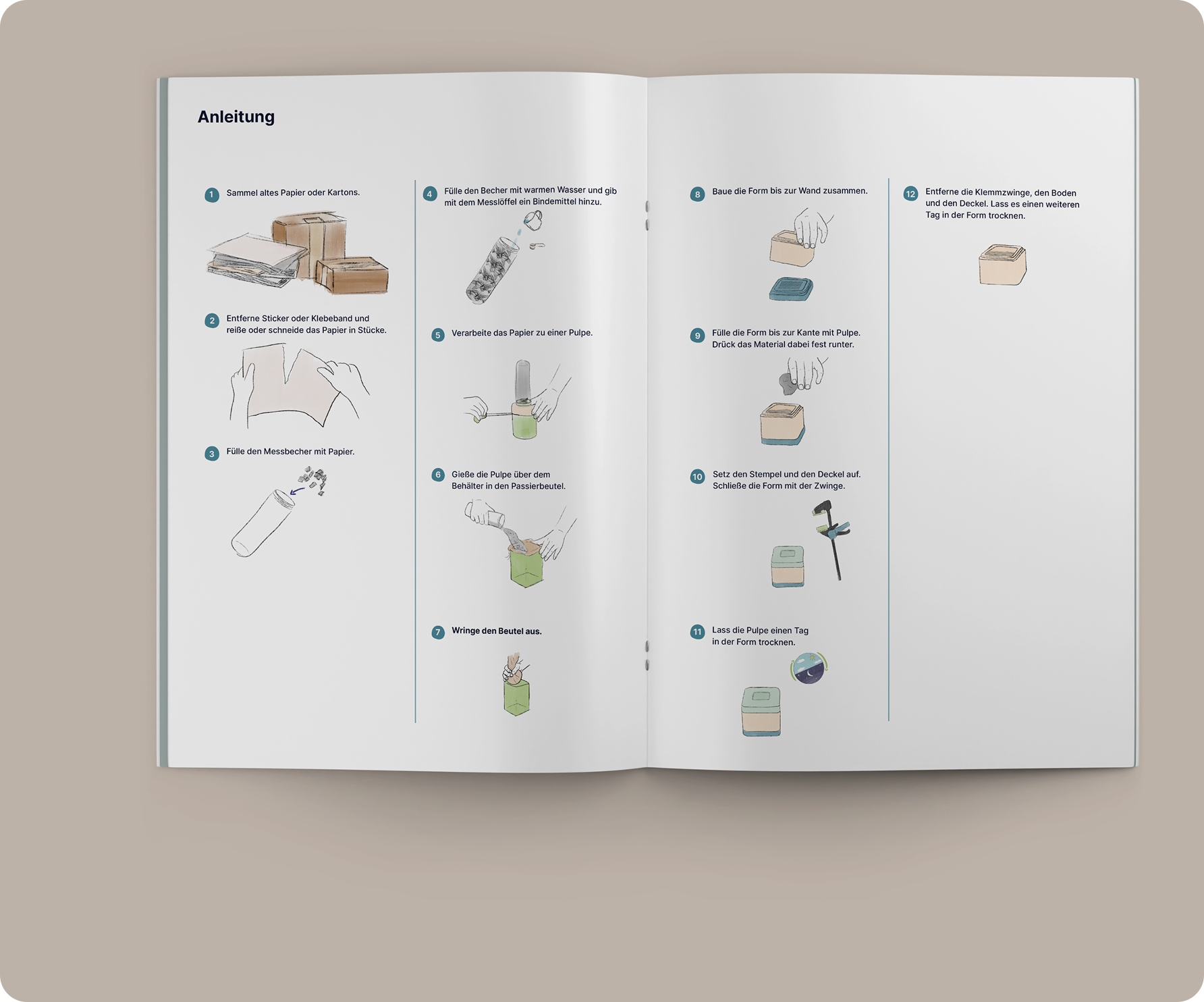
Tear
Children tear scrap paper from around the home into small pieces.
Process
Soaked and blended into a soft pulp.
Shape
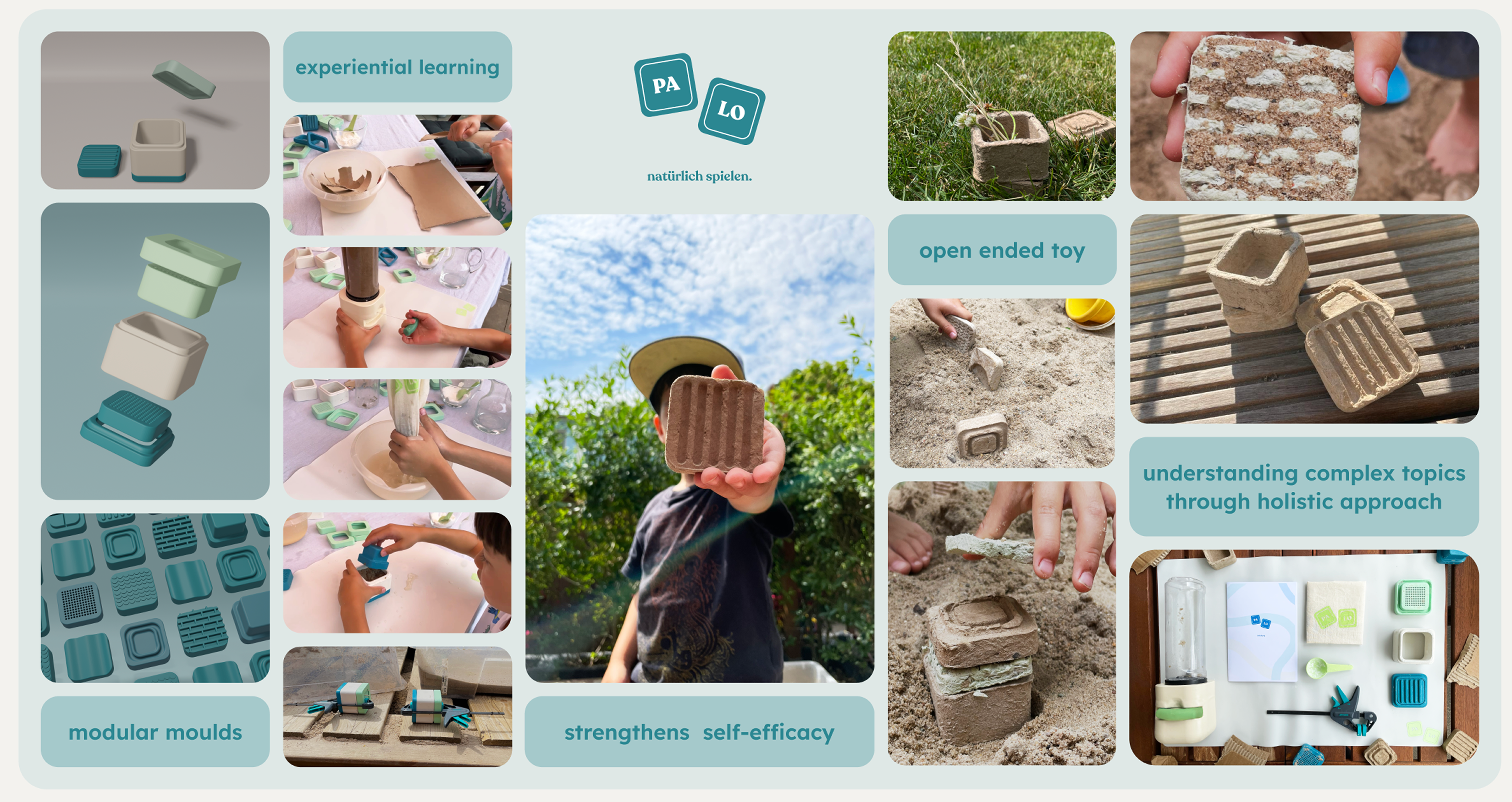
Pulp is pressed into modular moulds that can be mixed and matched.
Play
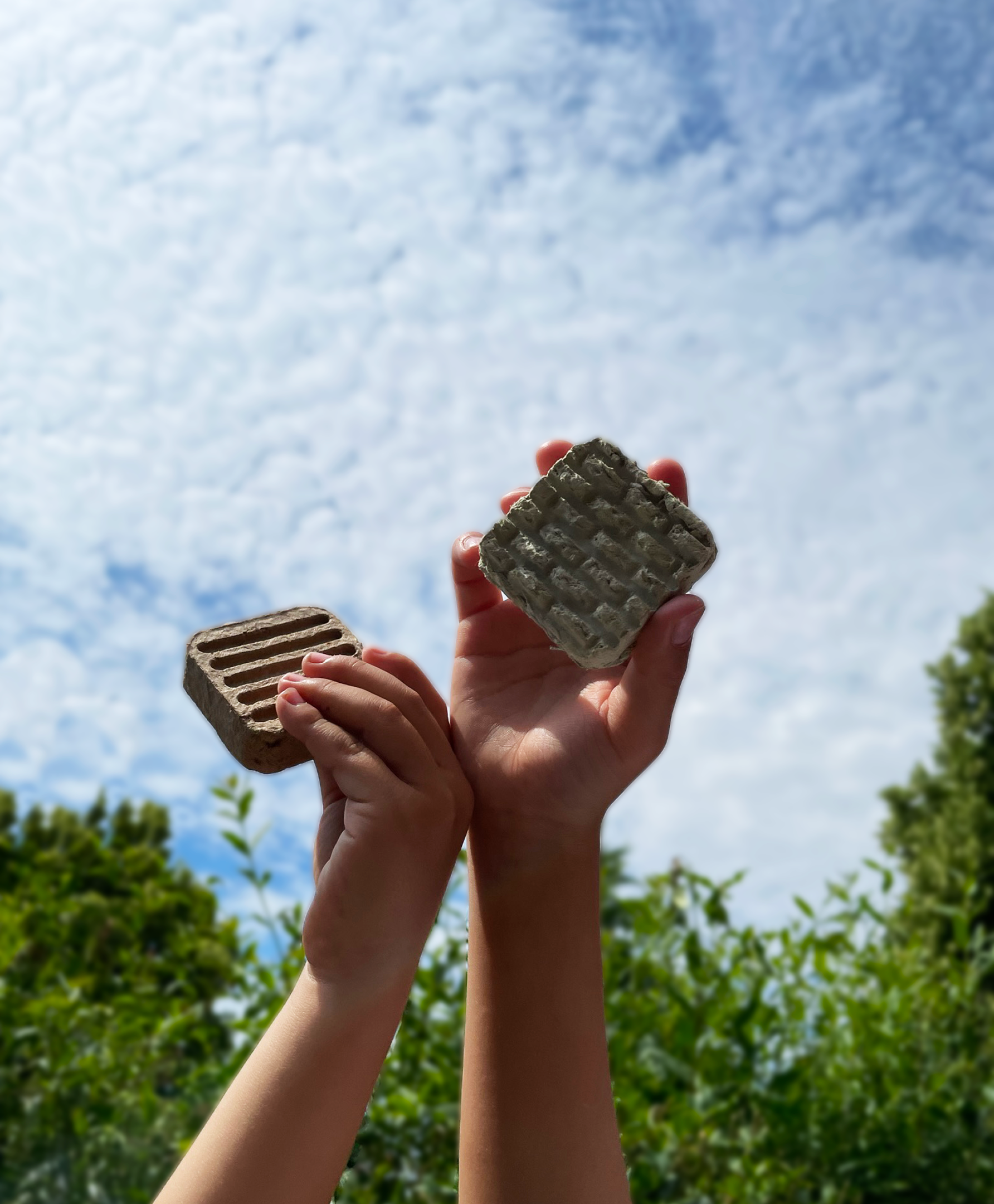
Demoulded blocks become a toy children built with their own hands.
Development.
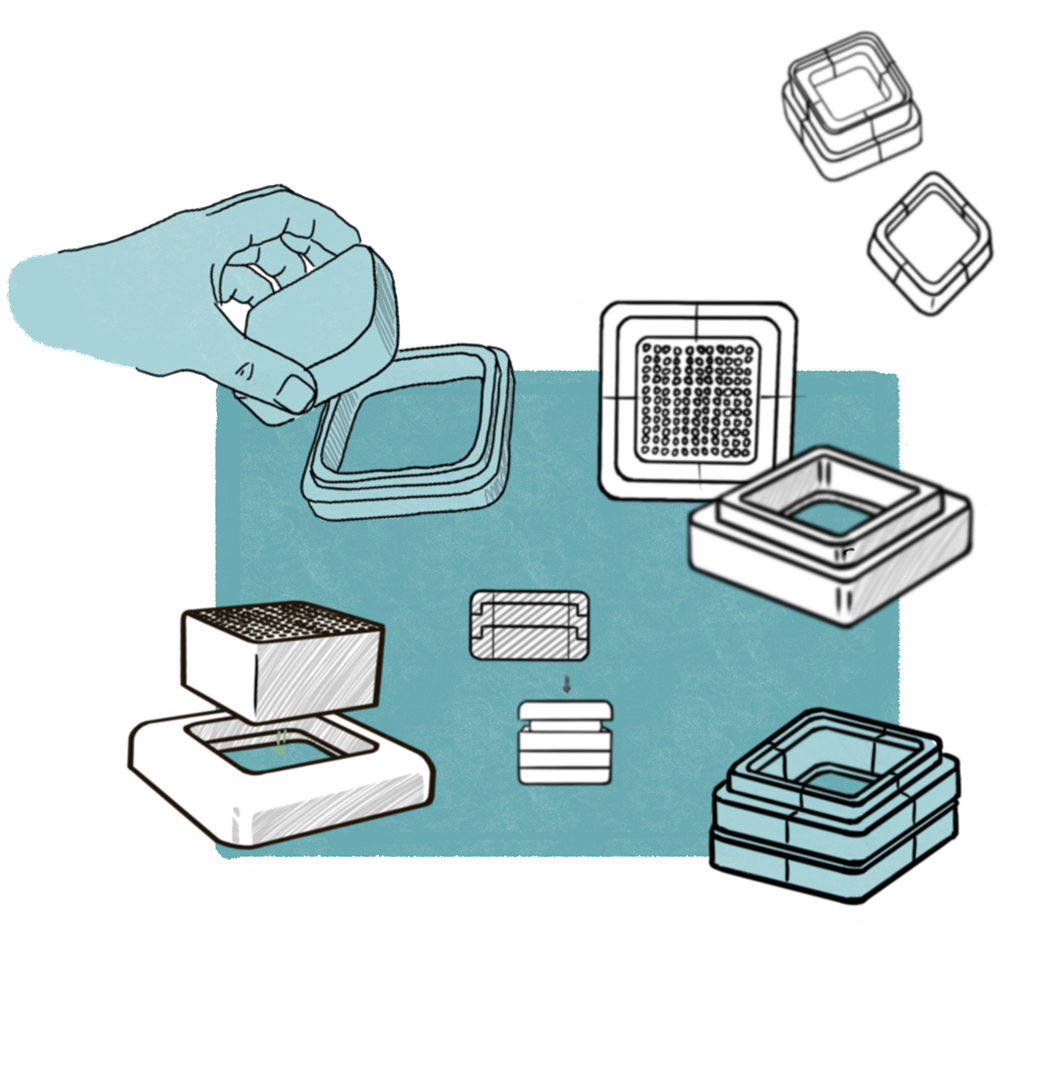
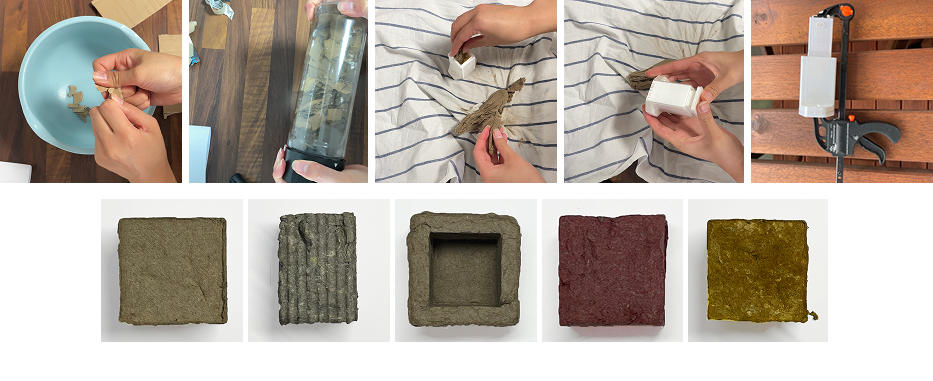
Iterative testing on mould geometry, paper formulation and pigment.
Concept sketches — mould geometries
Mould & texture testing · Formulation & colour testing
Three phases of play.
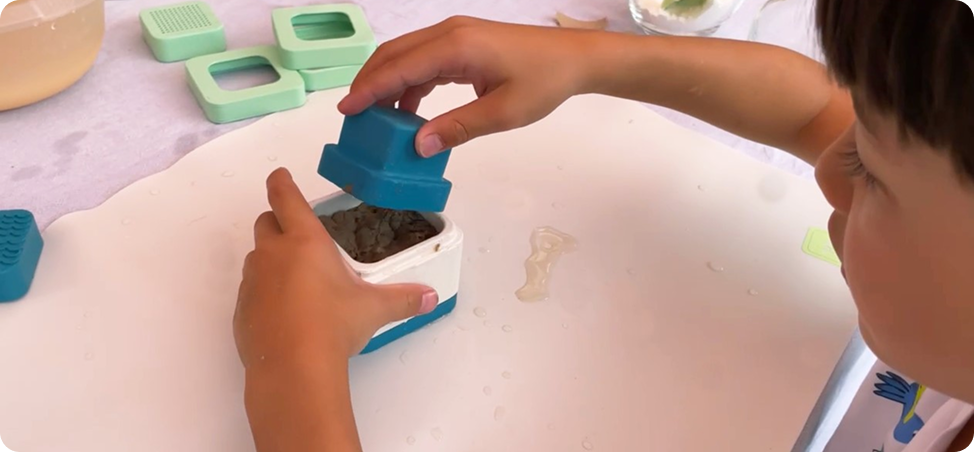
- 01
Craft
Children process household paper into pulp and shape their own blocks.
- 02
Learn
The booklet contextualises waste, recycling and resource cycles.
- 03
Play
Modular blocks become an open-ended toy that grows with the child.
A play system that teaches as it's built.